China Top 10 Energy Storage Solutions How to Choose?

Time:2026-11-06 Author:Aria
0%

China’s energy storage market is expanding quickly, but a large market does not make every technology suitable for every site. The International Energy Agency’s Batteries and Secure Energy Transitions report says global battery storage additions reached about 42 GW in 2023, more than 130% above 2022. CNESA’s 2024 industry white paper reports that China added approximately 21.5 GW and 46.6 GWh of new-type energy storage that year. These figures show momentum. They do not, by themselves, prove which system offers the best value for a factory, solar farm, or household.

This guide compares ten energy storage solutions, from lithium-ion and sodium-ion batteries to pumped hydro, compressed air, flow batteries, and thermal storage. Each has trade-offs in cost, duration, efficiency, footprint, safety, and maintenance. A battery cabinet beside a warehouse, for example, may support peak shaving, while a long-duration project needs a different design. The right choice depends on the duty cycle, grid conditions, available space, and expected service life—not on a product ranking alone. That distinction is easy to miss.

Readers asking how to choose the right energy storage solution should compare verified performance data and project-specific costs, rather than rely on headline capacity or advertised savings. Manufacturer specifications are useful, but independent testing and operating references matter too. No shortlist can replace a site assessment; even a well-researched comparison leaves uncertainties around future prices and actual usage. The following top-ten overview is a starting point, not a universal verdict.
China Top 10 Energy Storage Solutions How to Choose?

Understanding China’s Energy Storage Landscape

China’s energy storage landscape is not one market. Grid-scale projects, factory backup systems, and home batteries solve different problems. Some sites need fast response, while others value longer discharge during evening peaks. Local grid access, climate, and installation space can change the best design. A coastal warehouse faces humidity; an outdoor cabinet in northern China may face freezing mornings. It varies. That matters.

Tips: Compare usable energy, power output, efficiency, and warranty conditions, not headline capacity alone. Ask for test data at expected temperatures and a clear maintenance plan. Check fire detection, end-of-life handling, and how the system communicates with site controls.

Start by defining the job: how many hours of backup are needed, how often the system will cycle, and which loads must stay online. Then compare technology, footprint, response time, and service coverage against that profile. Don’t assume the newest configuration is automatically better. A comparison table can make uncertain inputs look precise. Recheck demand estimates against actual meter data, and allow for seasonal variation. An early shortlist may miss something; revising it is part of sound planning.

The Top 10 Energy Storage Solutions in China

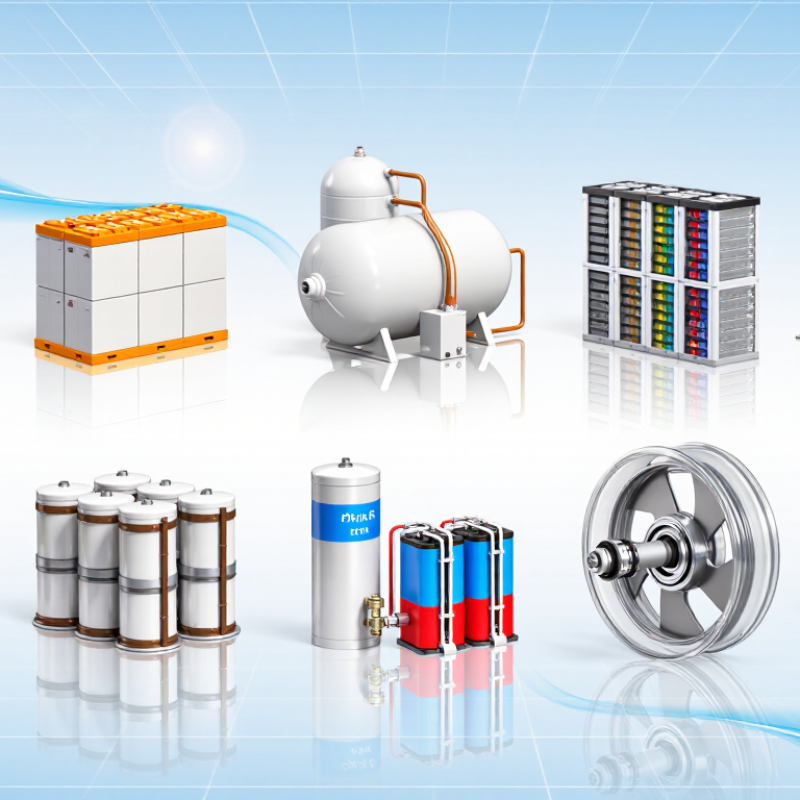
The Top 10 Energy Storage Solutions in China span different needs. They include pumped hydro, lithium-ion batteries, sodium-ion batteries, flow batteries, and compressed-air storage. Other options are thermal storage, hydrogen, flywheels, gravity storage, and supercapacitors. These are practical technology categories, not a strict ranking.

China’s National Energy Administration reported 73.76 GW of new-type energy storage capacity by the end of 2024, with 168 GWh of energy capacity. That was more than 130% above the previous year. The figures show rapid growth, but not every technology is equally mature. Lithium-ion suits frequent cycling and compact sites; pumped hydro needs suitable terrain and substantial construction. Flow batteries can serve longer-duration needs, while thermal storage can pair with heat demand. Hydrogen, gravity, and some other options remain more site-dependent or less commercially established. The best fit is rarely obvious from capacity figures alone.

Tips: Match duration to the job. Check round-trip efficiency, degradation, safety design, maintenance access, and grid connection. Ask for measured operating data, not just projected performance. A neat spreadsheet can still miss local constraints.

These technologies are presented as solution pathways, not a ranked list. The bars show indicative discharge-duration ranges; actual performance depends on system design, operating conditions, and project requirements. Use duration as one factor when comparing storage options.

How Different Storage Technologies Work

Energy storage is not one machine; each technology shifts energy across a different timescale. Lithium-ion batteries move lithium ions between electrodes during charging and discharging. They respond quickly, making them useful for smoothing solar output and meeting evening peaks. The IEA’s Batteries and Secure Energy Transitions report recorded 42 GW of battery storage additions in 2023, more than double the previous year. That growth is striking, but it does not make batteries right for every site.

Pumped hydro stores energy by moving water uphill, then releases it through turbines. It can provide long-duration power, but needs suitable terrain and significant construction. Flow batteries circulate liquid electrolytes through a cell stack; their energy capacity can be expanded by adding larger tanks. Thermal storage holds heat or cold in materials such as water or molten salts, while hydrogen stores electricity as gas after electrolysis. Converting it back to power adds losses. No option is perfect. Duration, land, temperature, and maintenance can change the practical choice.

Tips: Match the technology to the job. Ask how many hours of storage are needed, how often the system will cycle, and what output must be available. NREL’s 2022 Grid Energy Storage Technology Cost and Performance Assessment compares technologies across performance and cost assumptions. Use such figures as planning inputs, not guarantees; real operating conditions may differ.

Key Factors for Comparing Energy Storage Solutions

When comparing energy storage solutions in China, begin with the job the system must do, not its advertised capacity. A warehouse seeking peak-load reduction needs different power and discharge duration than a home backup system. Check usable energy in kilowatt-hours, continuous power in kilowatts, and how much capacity remains after expected degradation. A 100 kWh label does not guarantee 100 kWh available at the meter. Ask for round-trip efficiency under stated operating conditions, not just a best-case figure. Small details matter. At a site assessment, note summer heat, winter lows, dust, and space for ventilation or maintenance access.

Review safety design and certification records carefully. Request evidence for cell-level monitoring, thermal management, fault isolation, and emergency procedures. Compare warranties by both years and throughput; a long term may include restrictive operating limits. Confirm the system can communicate with existing inverters, meters, and energy-management software. Service response time matters when a fault stops dispatch. Ask who stocks replacement parts locally and what diagnostics are available remotely. Not always. Costs should include installation, controls, grid connection, maintenance, and end-of-life handling, rather than battery price alone. Models can look precise, yet forecasts depend on tariffs, load patterns, and site conditions that change. Leave room for uncertainty: request assumptions in writing, then test them against a month of real consumption data.

China Top 10 Energy Storage Solutions How to Choose? - Key Factors for Comparing Energy Storage Solutions

Storage Solution Typical Discharge Duration Typical Round-Trip Efficiency Response Speed Typical Service-Life Characteristics Common Applications Key Selection Consideration
Lithium iron phosphate (LFP) battery About 1–8 hours; project design can vary About 85–95% Milliseconds to seconds Often designed for several thousand cycles; actual life depends on temperature, depth of discharge, and operating conditions Grid-scale renewable integration, peak shaving, commercial and industrial backup Compare usable energy, safety design, degradation guarantees, cooling requirements, and total installed cost.
Sodium-ion battery Generally suited to short- to medium-duration applications; system duration depends on design Approximately 80–90% for many system designs Milliseconds to seconds Cycle life varies considerably by cell chemistry and operating conditions; deployments and operating records are less mature than for LFP Stationary storage, distribution networks, and applications where material availability or low-temperature performance matters Check independently verified performance, supply-chain maturity, warranty terms, and project-specific cold-weather performance.
Vanadium redox flow battery Commonly about 4–12 hours; longer durations are possible by increasing electrolyte capacity About 65–85% Seconds Electrolyte can be reused over long periods; stacks and auxiliary equipment require maintenance Long-duration renewable shifting, microgrids, and stationary applications with frequent cycling Assess footprint, pumping energy, electrolyte management, maintenance needs, and cost at the required duration.
Lead-acid battery Usually about 1–4 hours, depending on discharge rate and design About 70–85% Milliseconds to seconds Typically fewer deep cycles than modern lithium-ion systems; life is strongly affected by discharge depth and temperature Backup power, standby systems, and cost-sensitive applications with limited cycling Account for replacement frequency, ventilation, weight, recycling, and reduced life under frequent deep cycling.
Pumped-storage hydropower Typically several hours to more than a day, depending on reservoir size About 70–85% Seconds to minutes, depending on plant configuration Long-lived civil and electromechanical infrastructure; major refurbishment may be needed over the asset life Bulk grid balancing, renewable integration, and large-scale reserve capacity Evaluate suitable sites, water availability, permitting, construction time, environmental impacts, and transmission access.
Compressed-air energy storage (CAES) Several hours to days, depending on cavern and plant design Roughly 40–70% for many designs; configuration has a major effect Minutes Plant life can be long, but compressors, turbines, and other equipment need maintenance Large-scale, long-duration storage and bulk energy shifting Check geological suitability, thermal-management design, fuel requirements if applicable, and full-system efficiency.
Thermal energy storage Several hours to multiple days, depending on the medium and insulation Highly application-dependent; heat-to-heat storage can be efficient, while electricity-to-heat-to-electricity performance is generally lower Seconds to minutes, depending on system design Depends on the storage medium, thermal cycling, insulation, and plant equipment Industrial heat, district heating and cooling, and shifting thermal loads Best suited when the stored output can be used directly as heat or cooling; compare temperature range and thermal losses.
Hydrogen storage with power reconversion Hours to seasonal storage, depending on storage capacity Typically about 25–45% for electricity-to-hydrogen-to-electricity pathways Minutes to hours, depending on the electrolyzer and reconversion equipment Storage duration can be long; electrolyzers, fuel cells, and turbines have separate maintenance and replacement needs Long-duration or seasonal storage, industrial hydrogen use, and energy-system balancing Consider conversion losses, hydrogen demand, storage method, safety requirements, and whether hydrogen has a direct end use.
Flywheel energy storage Seconds to about 30 minutes in many applications About 85–95% Milliseconds High cycle capability; bearings, vacuum systems, and power electronics require maintenance Frequency regulation, power quality, and short-duration backup Compare standby losses, required discharge duration, cycling profile, and site-specific safety measures.
Supercapacitor energy storage Seconds to a few minutes About 90–98% Milliseconds or faster Very high cycle capability, but typically lower energy capacity than batteries Power-quality support, rapid frequency response, and short bursts of power Choose for high power and frequent rapid cycling rather than long-duration energy delivery.

Comparison note: Values are indicative ranges, not guaranteed project specifications. Efficiency, duration, response, and service life vary with system design, operating conditions, and measurement boundaries. Compare solutions using the same duty cycle, usable energy, safety requirements, site constraints, and lifecycle-cost assumptions.

How to Choose the Right Solution for Your Needs

Choosing an energy storage solution starts with the job it must perform, not its advertised capacity. A factory facing brief demand peaks needs power; a solar-equipped warehouse shifting afternoon surplus into evening use needs longer discharge. Record hourly loads for several weeks, then compare required power, usable energy, discharge duration, and expansion plans. Small errors in load assumptions can lead to costly oversizing.

China Energy Storage Alliance’s 2024 report recorded 31.39 GW of cumulative new-type storage power capacity and 66.87 GWh of energy capacity in China at the end of 2023. That equals roughly 2.1 hours of average duration across the reported fleet. It is context, not a design target. The IEA’s 2024 Batteries and Secure Energy Transitions report says power-sector battery storage must expand sixfold by 2030 in its net-zero pathway. Growth does not make every chemistry suitable for every site.

Compare lifecycle cost, round-trip efficiency, degradation, temperature tolerance, safety systems, and maintenance access. For a site with limited floor space, footprint and fire-protection design matter. For remote or long-duration applications, check whether alternative technologies better match operating cycles and local conditions. Ask suppliers to model your actual tariff and dispatch pattern, including cloudy days and outages. No option is perfect. Forecasts are imperfect, too; leave room to revisit assumptions.

FAQS

Which energy storage technologies are used in China?

Options include pumped hydro, lithium-ion, sodium-ion, flow batteries, compressed air, thermal storage, hydrogen, flywheels, gravity storage, and supercapacitors.

How should I choose a storage system?

Start with the job. Record hourly energy use for several weeks, then estimate required power, usable energy, and discharge duration.

Which option suits short, frequent cycling?

Lithium-ion batteries can suit frequent cycling and compact sites. Check degradation, temperature limits, safety systems, and maintenance needs.

What works for longer storage durations?

Flow batteries may fit longer-duration needs. Pumped hydro also stores energy at scale, but requires suitable terrain and substantial construction.

How large is China’s new-type storage capacity?

By the end of 2024, reported capacity reached 73.76 GW of power and 168 GWh of energy. Growth was rapid.

Is average storage duration a design target?

No. A reported fleet average of roughly 2.1 hours describes existing installations, not what your site needs.

What details should I compare before deciding?

Compare lifecycle cost, efficiency, degradation, footprint, fire protection, maintenance access, and grid connection. Ask for measured operating data.

How can I avoid choosing an oversized system?

Model actual tariffs, cloudy days, outages, and dispatch patterns. Small load-estimation errors can become costly. Our estimates can be wrong.

Conclusion

China’s energy storage landscape is expanding as electricity demand, renewable energy, and the need for a more flexible power system grow. This overview introduces ten major types of energy storage solutions used in China and explains how different technologies store and release energy. Options may differ in their storage medium, response time, duration, efficiency, and suitability for particular applications, from supporting the power grid to serving homes or businesses.

To compare these solutions, consider capacity, output, operating conditions, expected service life, safety, maintenance needs, and total cost over time. The best option depends on how and where the system will be used, the duration of storage required, and the available budget and infrastructure. By weighing these factors together, readers can better understand how to choose the right energy storage solution for their specific needs.

Aria

Aria

Aria is a dedicated marketing professional with a deep passion for innovative strategies and a keen understanding of our company's product offerings. With a wealth of experience in the industry, Aria excels at crafting engaging content that highlights the unique features and benefits of our......