China is a leading source of battery energy storage systems for homes, factories, and utility projects. Its suppliers range from established manufacturers to fast-growing integrators. Certification, however, is not a simple badge beside a product name. It affects safety, installation approval, insurance, shipping, and long-term operation.
This guide examines what certifications should energy storage systems have before buyers compare Chinese suppliers. The answer depends on the destination market, system size, chemistry, and application. Common evidence may include IEC test reports, UN 38.3 transport testing, CE marking for applicable European requirements, and UL standards for North American projects. Chinese projects may also require GB/T standards or CCC approval, depending on the equipment category. Requirements can overlap.
A reliable evaluation goes beyond collecting certificates. Buyers should check the exact model number, issuing laboratory, test scope, expiry date, and manufacturing site. A report for one battery cabinet may not cover a complete system with an inverter and fire-control equipment. That distinction is easy to miss. It deserves attention.
Professional suppliers should provide battery cell traceability, quality-control records, thermal-runaway test results, and clear warranty terms. Factory audits can reveal details that polished brochures hide, such as inconsistent labeling or weak cable protection. Even reputable companies may present documents unclearly. Ask precise questions.
This article also considers practical differences between residential, commercial, and grid-scale systems. Local authorities and utilities may impose additional rules. Certification is essential, but it is only one part of trust. Installation quality, monitoring, maintenance, and emergency planning matter just as much.
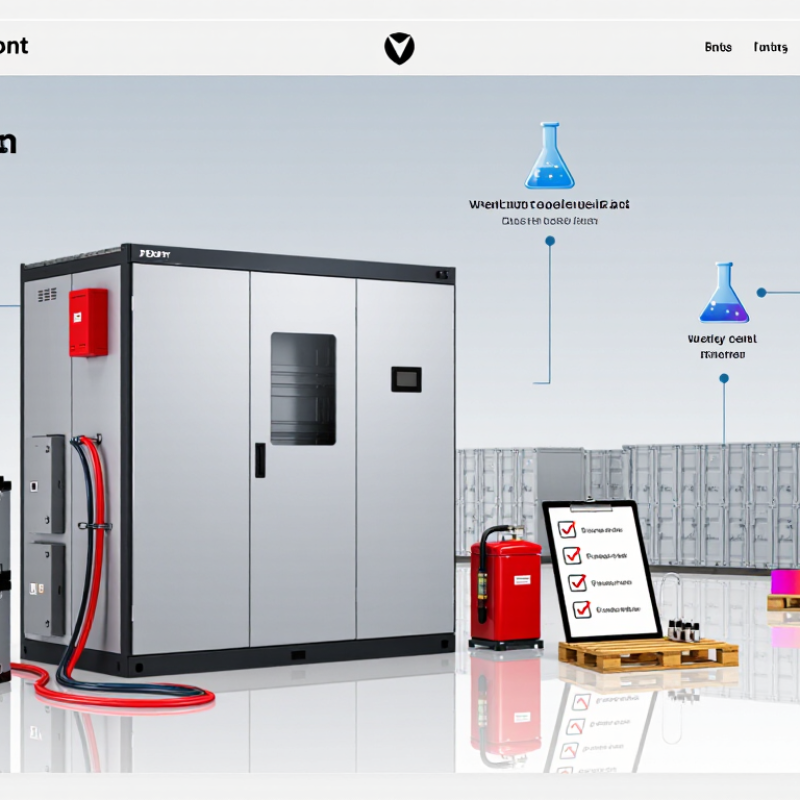
China’s energy storage systems serve different needs, so their designs and certifications vary.
Lithium-ion battery systems are common for homes, factories, and utility-scale projects.
Flow batteries suit longer discharge periods, although their footprint can be larger.
Lead-acid systems still support backup power in some telecom and industrial sites.
Thermal storage also helps buildings shift cooling demand away from peak hours.
Applications shape the system. A factory may use batteries to reduce demand charges and support rooftop solar. A household system stores daytime electricity for evening use. Utility projects provide frequency regulation, renewable integration, and backup capacity. Microgrids combine storage with solar, generators, and critical loads. The cabinet may stand outdoors, facing dust, rain, heat, and difficult maintenance access.
Certification should match the destination market and system design.
Chinese projects may reference GB/T requirements for batteries, power conversion equipment, and grid-connected testing.
Export projects often require IEC safety testing, UN 38.3 transport testing, and market-specific approvals.
Requirements such as UL 9540, UL 9540A, NFPA 855, or CE-related conformity may apply, depending on the country and installation.
A certificate alone proves little.
Engineers should check test reports, cell traceability, fire protection, thermal runaway controls, and software records.
In practice, documentation is sometimes incomplete.
That weakness deserves attention before procurement, not after a safety incident.
China’s energy storage market is expanding quickly, but certification separates a capable system from a risky shipment. The IEA reported that global battery storage additions exceeded 40 GW in 2023. This growth increases pressure on manufacturers to prove safety, performance, and traceability. For Chinese systems, buyers should review IEC 62619 for industrial battery safety, IEC 63056 for secondary lithium cells, and UN 38.3 transport testing. These documents should match the exact cell, rack, and operating conditions.
System-level evidence matters too. UL 9540 evaluates energy storage systems, while UL 9540A examines thermal runaway and fire propagation behavior. These are not interchangeable. CE marking supports European market access, but it is a conformity process, not a universal safety certificate. Local grid codes, installation rules, and fire regulations still apply. The IEA’s Batteries and Secure Energy Transitions report highlights the need for stronger battery supply-chain reliability. Certification helps buyers verify that reliability, although paperwork alone cannot replace factory audits or site testing.
Tips: Request current certificates, test reports, and product serial-number links. Check whether the report covers the delivered configuration, not an older prototype. Ask for temperature, humidity, fire-test, and degradation data. A certificate may look convincing. It can still be incomplete. Independent inspection before shipment is often worth the extra cost, especially for large containerized systems.
China’s energy storage market is expanding quickly. The IEA reported that global battery storage additions increased by about 130% in 2023, reaching 42 GW. Chinese buyers now examine certificates, test reports, and project approvals more carefully. Compliance usually begins with applicable GB/T standards , including GB/T 36276 for lithium-ion battery systems and GB/T 34131 for battery management systems. GB/T 36547 and GB/T 36548 support grid connection and performance testing. Requirements can vary by project type.
CCC certification is not automatically required for every energy storage system. Its applicability depends on the product category and Chinese regulatory scope. Voluntary CQC certification may provide additional technical evidence. Domestic projects may also require grid-connection review, fire-control design approval, and local acceptance records. UN38.3 testing supports battery transportation, but it does not replace system safety approval. A complete technical file should include cell data, thermal runaway testing, protection settings, factory inspection records, and traceable serial numbers. Certificates alone are not enough.
Tips: Request the original certificate and verify its issuing body. Check whether the certificate covers the complete system or only battery modules. Compare test dates with the delivered model. Ask for installation-site fire calculations, not generic brochures. Local rules sometimes change faster than product documents. That gap deserves careful review.
Export-oriented energy storage systems require certifications that match the destination market, system design, and installation environment. A reliable Chinese manufacturer should provide test reports for batteries, inverters, enclosures, and complete systems. Common references include IEC safety standards, UL standards for North American markets, CE requirements for the European Economic Area, and UN 38.3 testing for lithium battery transport. Certification is not a universal passport. Grid connection rules, fire protection codes, and electromagnetic compatibility requirements may differ by country.
In practical projects, buyers should request certificates with clear model numbers, test scope, laboratory details, and validity information. The documents must match the actual product shipped. Even a small change in cell type, battery capacity, or thermal design may require additional evaluation. Installation records also matter. Inspectors may review cable routing, emergency shutdowns, ventilation, and fire separation. This is where experience matters, although paperwork alone cannot prove field reliability. Some suppliers present component certificates but provide limited evidence for the complete energy storage system. That gap deserves careful questioning.
Tips: Ask for a certification matrix before signing a contract. Confirm the target country and grid code. Check whether reports cover the complete system. Review transport documents early. Keep translated manuals and maintenance procedures ready. A factory audit can reveal practical weaknesses, such as unclear labels or incomplete emergency instructions. Certification supports trust, but continuous testing and honest technical communication remain essential.
China Top Energy Storage Systems What Certifications?
Before purchasing an energy storage system from China, verify the exact certification of the complete system. A certificate for one battery module may not cover the assembled cabinet, inverter, or cooling unit. Check the model number, rated voltage, capacity, and manufacturing site. They must match your quotation.
Look for certification documents related to your destination market. Common references include UL 9540 for energy storage systems, UL 9540A for thermal runaway testing, IEC 62619 for industrial lithium batteries, and UN 38.3 for transport safety. CE marking may apply in certain markets, but it is not a universal safety certificate. Ask for the original certificate and test report, not only a product brochure. Confirm the issuing laboratory’s accreditation through its official database. Check the certificate number, issue date, scope, and expiration status.
Details matter. A credible supplier should explain installation limits, fire separation, emergency shutdown, and operating temperature. Request test conditions, not just pass statements. Contact the certification body when the document looks unclear or heavily edited. This small step can prevent expensive mistakes. Also ask whether later design changes require retesting. A different cell, enclosure, or battery management system can affect compliance. Certification does not guarantee safe installation. Local authorities may require additional permits, inspections, or fire protection measures. I have found that buyers sometimes trust a familiar logo too quickly. That is understandable, but incomplete. Independent engineering review remains worthwhile, especially for large systems.
The chart shows the primary scope of widely referenced energy-storage safety standards. A value of 1 means the standard directly addresses that verification area; 0 means it is not the standard’s primary scope.
Before purchase: request the complete certificate or test report, confirm the exact model and battery configuration, check the issuing body and validity, and verify that the document scope matches the delivered system. UN 38.3 is a transport-testing requirement, while UL 9540A is a fire-propagation test method rather than a standalone system certification.
GB/T 36276 covers lithium-ion battery systems. GB/T 34131 addresses battery management systems. Grid connection and performance testing may reference GB/T 36547 and GB/T 36548. Project requirements can differ.
No. Applicability depends on the product category and regulatory scope. Confirm the exact system classification before making compliance assumptions. Do not rely on a sales statement alone.
Request original certificates, complete test reports, cell data, and factory inspection records. Also request thermal runaway results and protection settings. Serial numbers should be traceable. Paperwork matters.
No. Transport testing supports battery shipping safety only. It does not replace system safety approval, fire review, or grid assessment. These are separate checks.
Compare model numbers, battery capacity, cell type, test dates, and thermal design. Check the issuing laboratory and certificate scope. A module certificate may not cover the complete system. Small changes matter.
Projects may need grid-connection review, fire-control design approval, and local acceptance records. Inspectors can examine ventilation, cable routing, emergency shutdowns, and fire separation. Generic brochures are insufficient.
Requirements depend on the destination country, grid code, and installation environment. Buyers may need battery, inverter, enclosure, and complete-system reports. Transport documents and electromagnetic compatibility evidence may also apply. There is no universal passport.
A matrix connects each requirement with a product model, report, laboratory, and validity period. It can reveal missing evidence early. Translated manuals and maintenance procedures should be included. I would still verify everything.
Not completely. Certificates support technical trust, but field conditions can expose weak installation practices. A factory audit may reveal unclear labels or incomplete emergency instructions. Continuous testing remains important. A neat PDF is not proof.
China’s energy storage systems serve diverse applications, including renewable energy integration, peak-load management, backup power, microgrids, and electric vehicle charging. Because these systems combine batteries, power conversion equipment, control software, and safety components, certification is essential for proving product quality, electrical safety, environmental performance, and reliable operation. Buyers should understand what certifications should energy storage systems have based on the system type, installation location, battery chemistry, and intended market.
For systems used in China, relevant approvals and testing may include electrical safety, electromagnetic compatibility, battery transportation, fire protection, and grid-connection requirements. Export-oriented systems may also need certifications that match the destination country or region, covering battery safety, inverter performance, industrial equipment, and environmental compliance. Before purchasing, customers should verify certificates through official certification databases or accredited testing organizations, confirm that the certificate matches the exact model, and check its validity, scope, and issuing body.
CCSC Energy