China Top 10 Energy Storage Manufacturers Benefits?

Time:2026-09-21 Author:Charlotte
0%

China’s energy storage industry has moved from pilot projects to large commercial deployments. Its leading manufacturers now supply lithium-ion batteries, battery management systems, power conversion equipment, and integrated storage containers. These products support renewable energy, industrial backup, grid balancing, and commercial peak-demand management.

This guide examines China’s top 10 energy storage manufacturers through practical criteria. These include production capacity, safety testing, product warranties, operating history, certifications, and project performance. Manufacturing scale matters, but it does not tell the whole story. A reliable supplier should also provide clear technical documents, responsive service, traceable components, and realistic performance data. Field experience often reveals more than a polished brochure.

A key question is, how can manufacturers benefit from energy storage systems? Energy storage can reduce factory demand charges, protect sensitive equipment, and use solar power after sunset. For example, a factory may charge batteries at midday and discharge them during evening production. This can improve energy planning and reduce exposure to short-term price changes. Storage can also support backup power, although capacity and response time must match the facility’s actual loads.

The benefits are not automatic. Poor thermal management, weak software integration, or unclear maintenance duties can increase risk and operating costs. Buyers should compare round-trip efficiency, cycle life, degradation assumptions, fire safety measures, and after-sales support. Independent verification remains valuable. No manufacturer is perfect. Careful evaluation helps companies select a system that fits their site, budget, and long-term energy strategy.
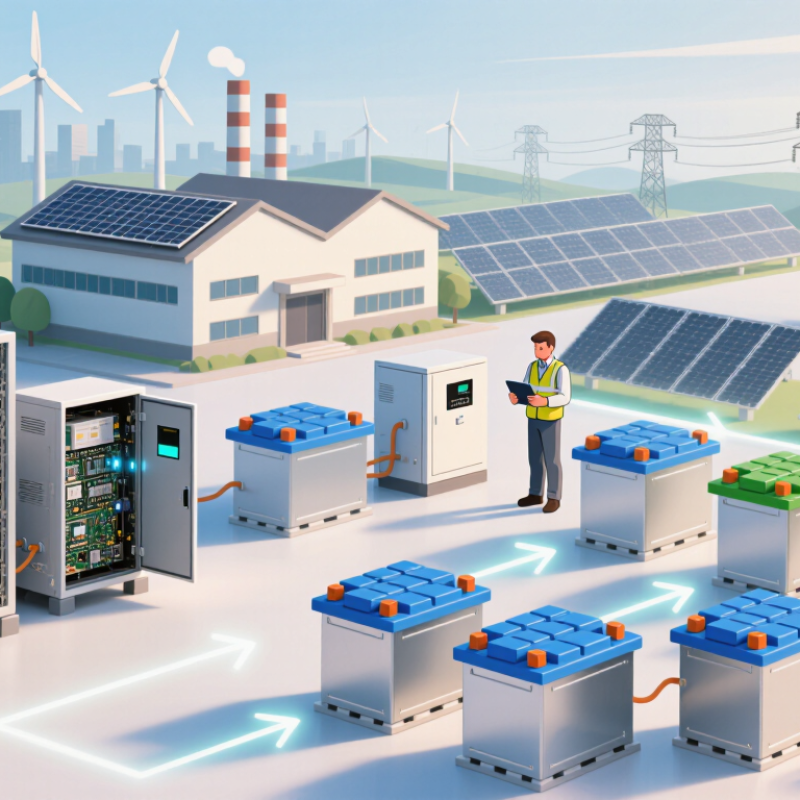
China Top 10 Energy Storage Manufacturers Benefits?

China’s Energy Storage Industry and Global Market Role

China’s energy storage industry plays a major role in the global clean energy market. Large-scale manufacturing has reduced production costs and shortened delivery times. A dense supply chain supports batteries, inverters, thermal systems, and control software. This connection helps projects respond quickly to solar and wind demand.

Chinese manufacturers also contribute practical engineering experience. They have supplied systems for utility grids, factories, data centers, and remote communities. Field experience shows that safety depends on more than battery capacity. Cell quality, fire protection, temperature control, and software monitoring matter equally. International buyers can benefit from flexible designs and mature production processes. However, the picture is not perfect. Some market forecasts may prove too optimistic, while recycling and long-term maintenance still require stronger attention.

Tips: Check independent test reports, warranty conditions, and service coverage before purchasing. Ask for clear information about degradation, response time, and emergency procedures. Compare total operating costs, not only the initial quotation. Local grid rules and climate conditions can change performance. Small details matter.

China’s global role is expanding through technology cooperation, component exports, and overseas project development. Reliable suppliers should explain limitations instead of promising unlimited performance. That honesty is valuable.

China’s Energy Storage Industry and Global Market Role

China’s cumulative installed capacity of new energy storage expanded rapidly from 2020 to 2024, supported by renewable-energy integration, grid flexibility requirements, and declining battery costs. This large domestic market also strengthens China’s role in the global energy-storage supply chain. Data refers to cumulative installed power capacity of new-type energy storage and excludes conventional pumped-storage hydropower.

Source: National Energy Administration of China and China Energy Storage Alliance; figures rounded where necessary.

Criteria for Identifying China’s Top 10 Energy Storage Manufacturers

China’s top ten energy storage manufacturers should be identified through evidence, not advertising. The International Energy Agency reported that China held about 80% of global battery cell manufacturing capacity in 2023. That scale matters, but it does not prove reliability. A credible assessment should examine annual production, delivered projects, defect rates, and warranty performance. Sales volume alone is a weak shortcut.

Safety must carry greater weight. The evaluation should check thermal-management design, fire testing, battery management software, and compliance with standards such as IEC 62619, IEC 63056, and UL 9540A. China’s National Energy Administration reported that new-type energy storage capacity exceeded 31 GW by the end of 2023. Rapid growth increases the need for transparent testing and incident disclosure. This is where rankings often become unclear.

Look beyond the factory gate. Compare round-trip efficiency, degradation after several years, response time, recycling arrangements, and service coverage in the target market. Financial strength also matters because a twenty-year project needs support after installation. Industry data from BloombergNEF and IEA can help verify manufacturing scale, supply-chain depth, and cost trends, but buyers should request project-level records. A manufacturer with fewer shipments may still offer better integration and support. I would score lifecycle value above the lowest quotation. That judgment is imperfect, but it is more practical than counting press releases.

Leading Companies and Their Core Storage Technologies

China Top 10 Energy Storage Manufacturers Benefits?

Leading Companies and Their Core Storage Technologies

China’s leading energy storage manufacturers increasingly compete through technology, not only production volume. The International Energy Agency reported that global battery storage additions exceeded 40 GW in 2023, more than doubling from the previous year. Chinese suppliers support this expansion with lithium iron phosphate cells, modular battery racks, and containerized systems. LFP chemistry offers strong thermal stability, long cycle life, and lower dependence on nickel and cobalt. That matters for utility projects exposed to high temperatures and frequent daily cycling. Still, lower cost does not automatically mean better value.

Their core systems usually combine battery management systems, power conversion equipment, energy management software, and liquid cooling. These components control charging speed, temperature, voltage, and grid response. A 2024 BloombergNEF analysis identified falling battery pack prices as a major driver of stationary storage growth. However, project economics depend on more than cell prices. Software quality, warranty terms, fire protection, and local service can decide real-world performance. Sodium-ion technology is also entering commercial trials, especially where cold-weather operation and material availability matter. Flow batteries remain relevant for longer-duration applications, although their larger footprint can restrict deployment. The U.S. Department of Energy notes that storage duration, safety, and degradation should be evaluated together. A simple capacity ranking can mislead. Site conditions often reveal the difference.

Key Benefits of Choosing Chinese Energy Storage Manufacturers

Choosing Chinese energy storage manufacturers can offer practical advantages beyond lower purchase prices. China accounted for roughly 80% of global lithium-ion battery manufacturing capacity in 2023, according to BloombergNEF’s Battery Supply Chain data. This dense industrial base supports faster sourcing for cells, battery management systems, inverters, and containers. It can also reduce coordination delays during large commercial projects.

Scale matters. The International Energy Agency reported that global battery storage deployment grew rapidly in 2023, while manufacturing capacity expanded ahead of near-term demand. Chinese manufacturers often operate mature production lines and provide flexible system configurations. Buyers may request different voltage levels, cooling methods, cabinet sizes, or monitoring functions. These options help match storage systems with factories, solar farms, and grid applications. However, cheaper equipment is not automatically better. Warranty exclusions, software quality, and replacement-part access deserve careful review.

Tips: Ask for third-party test reports, thermal safety records, degradation curves, and factory audit evidence. Confirm response times for remote support and spare parts. UL, IEC, and local certification requirements should be checked before signing. The Global Battery Alliance also stresses traceability and responsible supply chains, areas that still require deeper verification. A polished datasheet can hide practical weaknesses. Review installation references, inspect sample units, and compare usable capacity rather than nominal capacity. Small oversights become expensive later.

Applications, Costs, Safety, and Supply Chain Considerations

China’s leading ten energy-storage manufacturers benefit from scale, dense supplier networks, and practical export experience. Their systems serve solar farms, factories, data centers, and backup applications. The International Energy Agency reported that global battery-storage additions exceeded 40 GW in 2023, more than doubling in one year. This growth rewards manufacturers that can deliver containers, inverters, software, and spare parts together.

Costs remain attractive, but the lowest quotation is not always the cheapest choice. BloombergNEF reported a 2024 average lithium-ion battery-pack price of 115 US dollars per kWh, a 20% annual decline. Project buyers should also calculate installation, cooling, insurance, replacement cells, and grid-integration costs. Supply-chain depth matters. The IEA reported global battery-cell manufacturing capacity above 2.5 TWh in 2023, while demand was much lower. This capacity can improve availability, yet oversupply may weaken quality discipline. I would still request production records, not only factory photographs.

Tips: Compare round-trip efficiency, degradation guarantees, fire-testing evidence, and software response time. Ask for a serial-number traceability process. Require independent inspection before shipment. Safety needs physical detail: separated battery racks, thermal sensors, gas detection, ventilation, and tested emergency procedures. UL 9540A test results can support fire-risk evaluation, but they do not replace site-specific engineering. A recent industry report may look convincing. The contract details matter more.

China Top 10 Energy Storage Manufacturers Benefits? - Applications, Costs, Safety, and Supply Chain Considerations

Storage Solution / Configuration Typical Application Main Benefits Indicative 2024–2025 System Cost
(USD/kWh)
Round-Trip Efficiency Typical Cycle Life Safety Considerations Supply-Chain Considerations
LFP Battery Energy Storage System
10–500 MWh, 2–4 hours
Renewable-energy shifting, peak shaving, capacity support, and ancillary services. High safety compared with nickel-rich chemistries, long service life, mature manufacturing, and competitive cost. $120–$250 85%–92% 4,000–8,000 full cycles Thermal runaway prevention requires cell monitoring, spacing, cooling, fire detection, and suppression systems. China has a highly developed LFP, cathode, cell, container, and power-conversion supply chain; export projects still require local certification.
LFP Containerized System
1–5 MWh blocks, 1–2 hours
Fast frequency response, grid balancing, and solar or wind smoothing. Modular deployment, rapid response, standardized transport, and relatively simple expansion. $140–$280 86%–93% 4,000–7,000 full cycles Container-level gas detection, ventilation, thermal propagation testing, and emergency access are important. Containerized designs shorten installation time, but shipping, import duties, spare parts, and grid-code compliance affect delivered cost.
Commercial and Industrial LFP
100 kWh–20 MWh, 2–4 hours
Demand-charge reduction, backup power, solar self-consumption, and microgrids. Lower electricity bills, improved power quality, and better utilization of on-site solar generation. $220–$450 85%–92% 4,000–8,000 full cycles Indoor installations need ventilation, clearances, fire-rated rooms, and compliance with local electrical codes. Project economics depend strongly on installation labor, transformer availability, interconnection studies, and after-sales service.
Residential LFP Battery
5–30 kWh, 1–4 hours
Solar self-consumption, backup power, and time-of-use tariff optimization. Quiet operation, modular capacity, improved household resilience, and compatibility with hybrid inverters. $300–$700 installed 85%–95% 4,000–8,000 full cycles Use certified enclosures, battery-management systems, suitable wall or floor clearances, and qualified installation. Retail cost includes inverter, installation, permitting, software, and warranty support; these items vary more than cell cost.
High-Power LFP System
10–100 MW, 0.25–1 hour
Frequency regulation, spinning-reserve replacement, ramp-rate control, and voltage support. Very fast response, high power density, and strong revenue potential in ancillary-service markets. $180–$400 82%–90% 5,000–10,000 equivalent cycles High C-rate operation increases heat generation, making thermal design and operating limits essential. Power-conversion equipment, controls, and grid interconnection can be more restrictive than battery availability.
Sodium-Ion Battery System
100 kWh–100 MWh, 1–4 hours
Stationary storage where low-temperature performance, material availability, or cost stability is prioritized. Uses more abundant sodium-based materials, offers good low-temperature behavior, and reduces dependence on lithium. $150–$300 80%–92% 3,000–6,000 full cycles Thermal-management and fire-protection practices remain necessary; project-specific test data should be reviewed. The technology is less mature than LFP, with narrower production scale, fewer field references, and developing recycling channels.
Vanadium Redox Flow Battery
1–100 MWh, 4–12 hours
Long-duration renewable integration, daily cycling, and applications requiring independent power and energy sizing. Very long cycle life, low degradation, non-flammable electrolyte, and flexible duration expansion. $300–$700 65%–85% 10,000–20,000+ cycles Electrolyte is generally non-flammable, but pumps, piping, tanks, and spill containment require engineering controls. Vanadium price volatility and electrolyte availability can materially influence capital cost and lead time.
Nickel-Manganese-Cobalt Battery
1–20 MWh, 1–2 hours
Space-constrained backup, mobile or hybrid systems, and applications prioritizing high energy density. Higher gravimetric energy density and compact footprint compared with many LFP systems. $180–$350 88%–94% 2,000–5,000 full cycles Greater attention is required for thermal propagation, state-of-charge limits, cooling, and fire protection. Nickel and cobalt exposure can create price and ethical-sourcing risks; traceability and recycling provisions should be assessed.
Second-Life EV Battery System
100 kWh–10 MWh, 1–4 hours
Low-cost backup, behind-the-meter storage, renewable self-consumption, and demonstration projects. Potentially lower battery cost and improved material utilization through reuse. $120–$300 before project-specific integration 75%–90% 1,000–4,000 additional full cycles Different pack histories and chemistries require detailed screening, diagnostics, isolation, and conservative operating limits. Availability, ownership records, residual warranty, diagnostic data, and transport regulations can limit scalability.
Hybrid Storage Portfolio
10–500 MWh, mixed durations
Projects combining short-duration batteries with long-duration storage, renewable generation, or backup generation. Balances fast response, energy shifting, asset life, revenue diversity, and resilience requirements. $180–$600 70%–92% Technology-dependent Requires coordinated protection, controls, emergency response procedures, and separate hazard assessments. Diversification reduces dependence on one technology, but increases controls integration, maintenance, training, and spare-parts complexity.

Cost and performance note: Figures are indicative global project ranges for 2024–2025 and are not quotations. Costs vary with battery duration, land and civil works, power-conversion equipment, interconnection, financing, logistics, taxes, local labor, warranty terms, and permitting. Cycle-life figures generally refer to equivalent full cycles under controlled operating conditions; actual life depends on temperature, depth of discharge, charging rate, and maintenance.

FAQS

Why is China important in the global energy storage market?

Large-scale manufacturing lowers costs and can shorten delivery times. A dense supply chain supports batteries, inverters, cooling systems, and control software. Delivery speed helps projects respond to changing solar and wind output.

Which battery chemistry is widely used in modern storage systems?

Lithium iron phosphate batteries are widely used. They offer strong thermal stability, long cycle life, and lower dependence on scarce materials. Lower cost is useful, but it does not guarantee better overall value.

What components are included in a complete storage system?

A complete system usually includes battery racks, battery management systems, power converters, software, cooling, and fire protection. These parts control voltage, temperature, charging, and grid response. One weak component can reduce system performance.

Where can energy storage systems be used?

Systems can support utility grids, factories, data centers, and remote communities. Containerized units may stand beside solar fields or industrial buildings. Each location needs different power and duration settings.

What should buyers check before purchasing an energy storage system?

Check independent test reports, warranty conditions, service coverage, and degradation data. Ask about response time and emergency procedures. Compare total operating costs, not only the initial quotation.

Does a larger battery always provide better value?

No. Project value depends on storage duration, software quality, safety design, maintenance, and local electricity rules. A large battery may perform poorly if cooling or grid integration is inadequate. Capacity alone can mislead.

Are newer storage technologies entering the market?

Yes. Sodium-ion batteries are entering commercial trials, especially for cold climates and material availability. Flow batteries may suit longer-duration storage, but their larger footprint can limit installation options. Results remain uneven.

What environmental and maintenance issues still need attention?

Recycling, long-term maintenance, and battery degradation require stronger planning. Local climate can change performance, especially in very hot areas. Some forecasts may be too optimistic. That deserves review.

How should reliable suppliers communicate with international buyers?

Reliable suppliers should explain limitations, service boundaries, and emergency procedures clearly. They should avoid promising unlimited performance. Honest details are more useful than impressive claims. Sometimes, less sounds better.

Conclusion

China has become a major force in the global energy storage industry, supported by strong manufacturing capacity, extensive supply chains, engineering expertise, and growing investment in renewable energy. This overview explains how China’s top 10 energy storage manufacturers can be identified through criteria such as technological innovation, production scale, product reliability, safety performance, certifications, research capability, and international service coverage. Their core technologies may include lithium-based battery systems, containerized storage, battery management systems, thermal control, and integrated power conversion solutions.

Choosing Chinese energy storage manufacturers can provide benefits such as competitive pricing, flexible customization, fast production, and access to mature component networks. The article also considers applications in renewable power, commercial facilities, industrial operations, and backup supply, while addressing installation costs, lifecycle value, safety management, recycling, logistics, and supply chain resilience. It further examines how can manufacturers benefit from energy storage systems by reducing peak-demand expenses, improving power reliability, supporting clean-energy integration, and creating more efficient energy management strategies.

Charlotte

Charlotte

Charlotte is a seasoned marketing professional with a deep understanding of the company's portfolio and a passion for elevating its presence in the market. With a keen eye for detail and a commitment to excellence, she ensures that our professional blog is regularly updated with insightful articles......